Funding from the Vilnius University (VU) Science Promotion Fund has been awarded to three research projects being carried out by researchers at the VU Faculty of Chemistry and Geosciences (FCHG). Each project has been allocated 18,000 euros.
Dr Maab Abdulsamad Ahmed Elsheikh. Photo by Ugnius Bagdonavičius.
Implants and bone substitutes without the risk of infection – this is the goal pursued by Dr. Maab Abdulsamad Ahmed Elsheikh, a postdoctoral researcher at the Faculty of Chemistry and Geosciences (FCHG) of Vilnius University (VU). The researcher is developing biomaterials that combine calcium hydroxyapatite – a natural mineral that makes up the majority of bones and tooth enamel – with naturally occurring antibacterial compounds: propolis, clove oil, bee pollen and eugenol. The two-year postdoctoral fellowship at VU FCHG has opened the way for research that could become the foundation for future bone and dental implants.
From Botswana to the laboratories of Vilnius University, Leungo Kushatha Mbaiwa’s academic journey has spanned across continents. After completing her bachelor’s degree in Pharmaceutical Engineering in China, she brought her passion for chemistry to Lithuania, where she recently defended her master’s thesis. In this interview, Leungo shares her experiences adapting to a new culture, navigating the challenges of biosensor research, and the impact of finding a supportive community far from home.
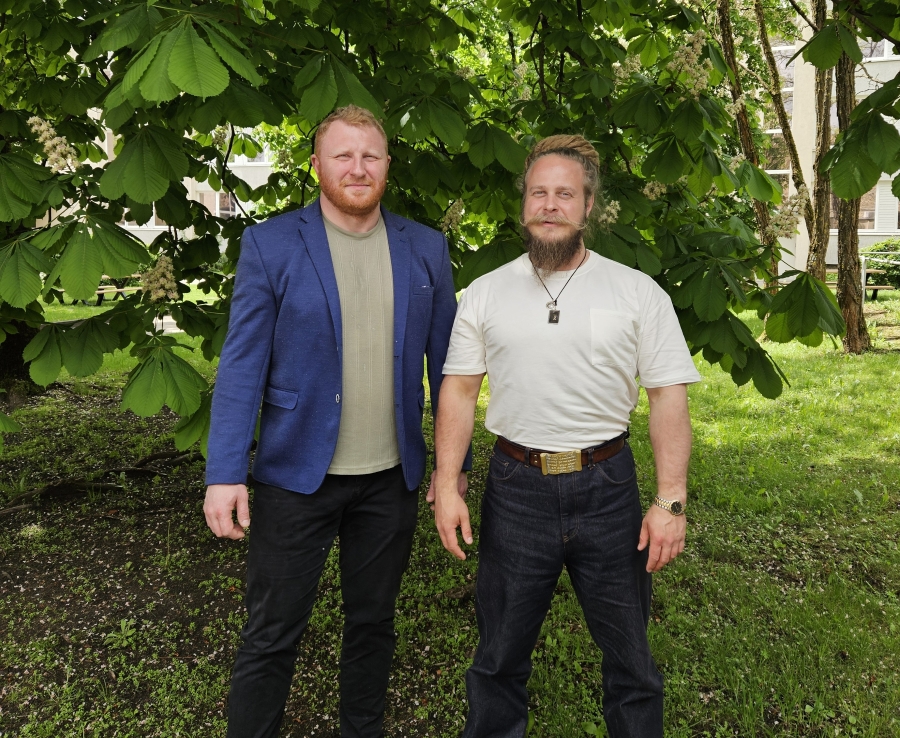
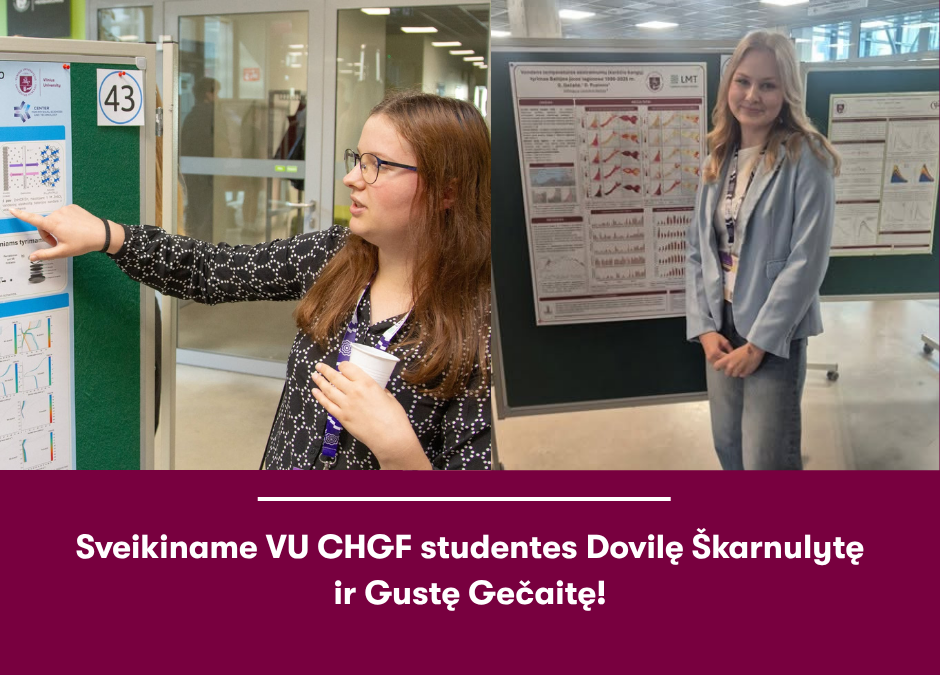
From June 28 to July 1, the international conference "Balticum Organicum Syntheticum 2026" (BOS 2026) was held in Tallinn, Estonia. There, Martyna Paulauskaitė and Urtė Milerytė, students of Vilnius University's (VU) Faculty of Chemistry and Geosciences (FCHG), won two awards for their poster presentations.
At the ceremonial Vilnius University (VU) event "Finis Anni Academici," community members who have contributed to the university's activities and development were honored. We are delighted that members of the VU Faculty of Chemistry and Geosciences community were also recognized.
Bone implantation often marks not only the beginning of healing, but also a battle against infection. As the number of antibiotic-resistant bacteria continues to rise, scientists around the world are searching for ways to integrate infection protection directly into implants themselves. Dr. Gabrielė Meižytė, a postdoctoral researcher in the Faculty of Chemistry and Geosciences (FCHG) at Vilnius university (VU), is developing a bioceramics material that could one day not only help restore damaged bone tissue, but also actively inhibit the spread of bacteria.
On June 15, 2026, the graduation ceremony of the Vilnius University (VU) Faculty of Chemistry and Geosciences took place. Graduation diplomas were awarded to Bachelor's and Master's graduates.
During the ceremony, the Gražina Romualda Klimavičius nominal scholarship certificate for the 2024–2025 academic year was also presented. The scholarship was awarded to Dinas Tverijonas, a fourth-year undergraduate student of the Biochemistry study program at the Institute of Chemistry, Faculty of Chemistry and Geosciences, Vilnius University.
In May 2026, at the 15th International Conference Modern Building Materials, Structures and Techniques (MBMST) held in Lithuania, Ieva Lekstutytė, a PhD student at the Institute of Geosciences, Faculty of Chemistry and Geosciences, Vilnius University, presented the research paper “Evaluation of Consolidation Stages and the Influence of Stress Level on Organic Soils”, co-authored with G. Žaržojus, V. Samalavičius, V. Martinkus and M. Grinevič.
Prof. Dr. Ieva Plikusienė. Photo by the Center for Physical Sciences and Technology
Each year, the Young Academy of Europe (YAE) presents the André Mischke Prize for Science and Policy to recognise outstanding scientific achievements and contributions to science and science policy. This award is granted to one European researcher per year. We are delighted to announce that this year's recipient is Prof. Dr. Ieva Plikusienė, researcher and lecturer at the Faculty of Chemistry and Geosciences of Vilnius University.
On June 11, the Faculty of Chemistry and Geosciences at Vilnius University will host Doc. Björn Kröger from the University of Helsinki. During his visit, he will deliver a presentation entitled “The Aging of Eco-Genealogical Units During the Phanerozoic”, introducing recent research on long-term patterns of biodiversity and the evolution of ecological communities throughout the Phanerozoic Eon.
The presentation will explore how marine animal communities, their ecological structures, and patterns of persistence have changed over more than 500 million years. Drawing on extensive paleontological data, Doc. Kröger will discuss the development of eco-genealogical units and their significance for understanding long-term biodiversity trends and extinction processes in Earth’s history.